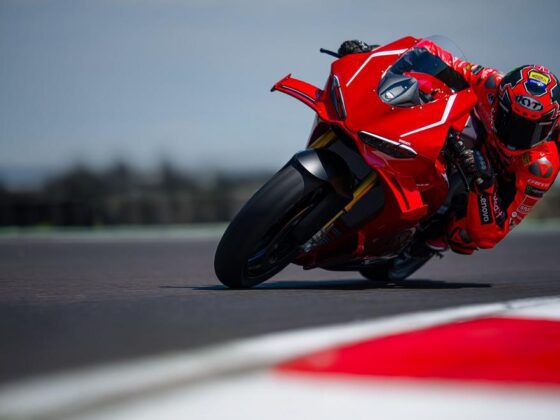
The 2026 Ducati DesertX V2 is no longer just a “retro-inspired” experiment; it has officially evolved into a ground-up redesign. Ducati has replaced the legendary Testastretta engine with an all-new V2 platform, slashing weight and shifting the bike’s soul even further toward the dirt.
Here is the deep dive into the 2026 iteration of the Bologna-bred desert stormer.
1. The Heart of the Beast: The New 890cc V2
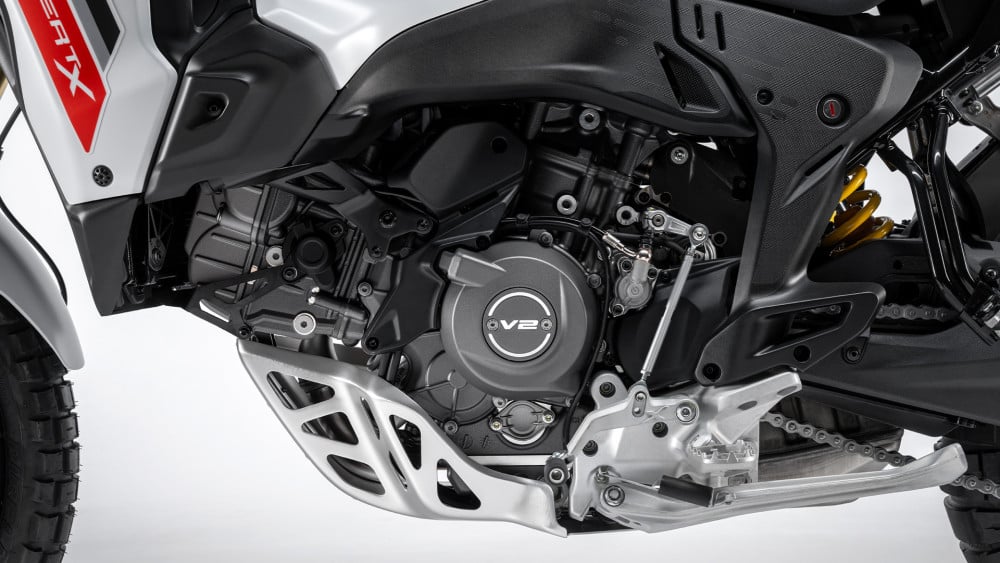
The biggest “meat” of the 2026 update is the engine. Ducati has ditched the 937cc Testastretta in favor of a brand-new 890cc V2. This isn’t just a downsized engine; it’s the lightest twin-cylinder Ducati has ever built.
- IVT (Intake Variable Timing): This is the game-changer. By varying the intake timing, Ducati has managed to flatten the torque curve. You now get 70% of peak torque at just 3,000 rpm, making it much more “tractable” when crawling through technical rock sections.
- The “Desmo” Departure: In a controversial move for purists, this engine uses a conventional spring valve train instead of the signature Desmodromic system. Why? To extend service intervals to a massive 45,000 km for valve checks.
- Performance Stats:
- Power: $110.3 \text{ hp}$ @ 9,000 rpm.
- Torque: $92 \text{ Nm}$ @ 7,000 rpm.
- Weight: The engine alone is significantly lighter, contributing to a total bike weight reduction.
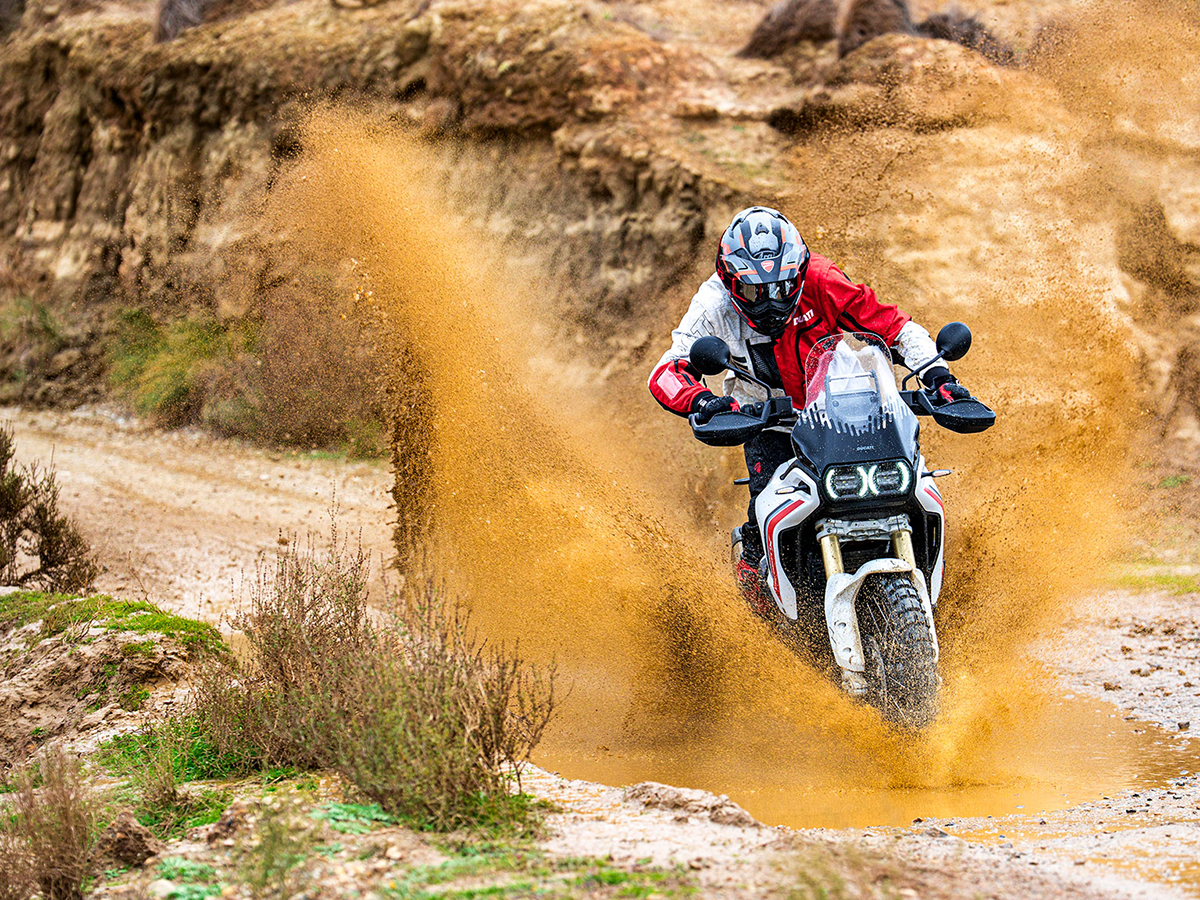
2. Chassis & Ergonomics: Slimmer, Lower, Tougher
The 2026 model introduces an aluminum monocoque frame where the engine acts as a stressed member. This design also incorporates the airbox, making the bike feel much narrower between the legs.
- The “Scorpion” Silhouette: The front fairing and twin LED headlights have been lowered by 20 mm (0.8 inches). This gives the bike a more aggressive, “tucked” look and improves forward visibility.
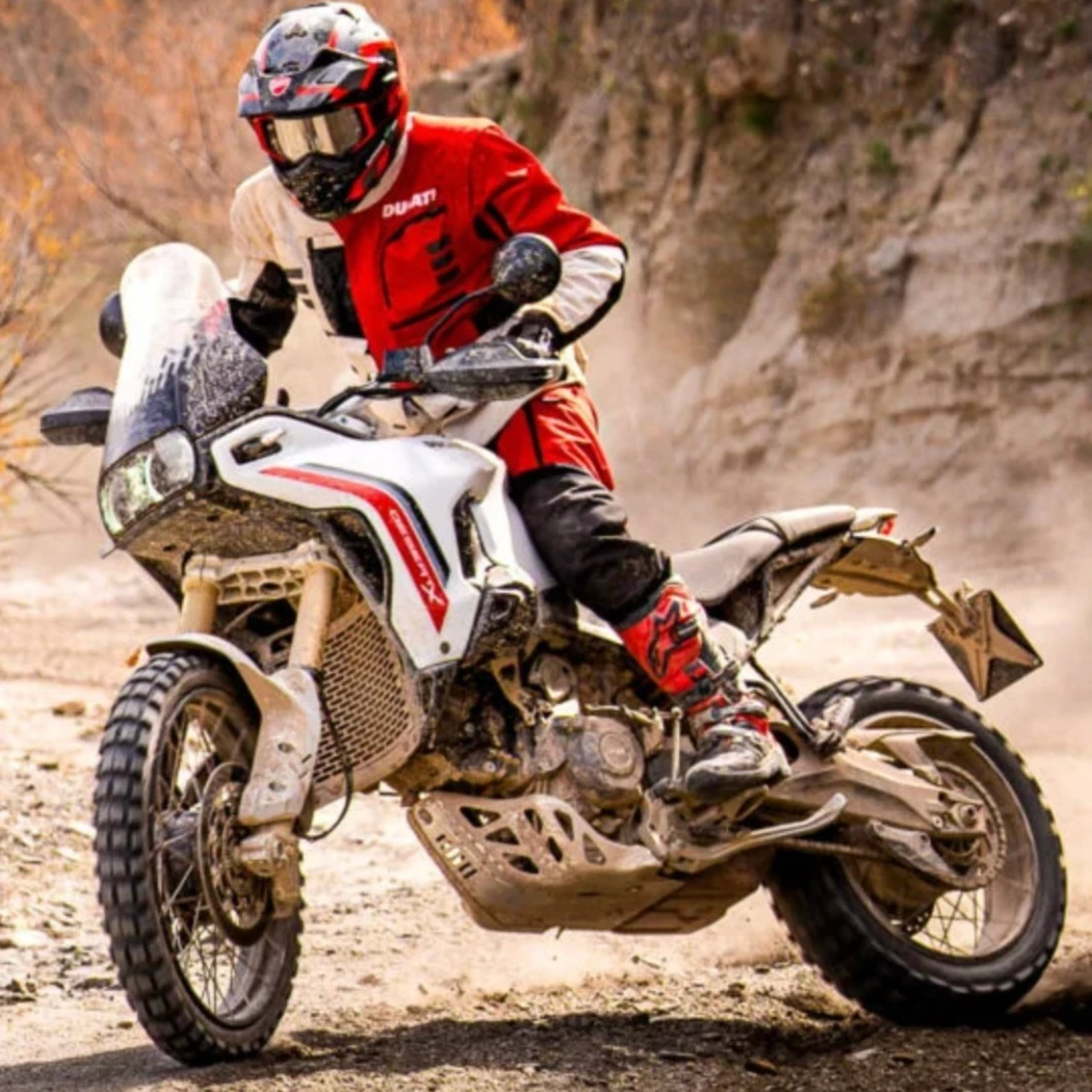
- Rider Triangle: Ducati listened to feedback from the Erzbergrodeo. They moved the footpegs back and pulled the handlebars and seat forward. This “rally-centric” geometry makes transitioning from sitting to standing much more natural.
- Fuel Strategy: The new 18-liter (4.8 gal) polymer tank is slimmer. While it holds slightly less fuel than the previous gen (down from 21L), the mass is positioned much lower to eliminate that “top-heavy” feeling in the sand.
3. Technical Specifications (At a Glance)
| Feature | 2026 Ducati DesertX V2 |
| Engine | 890cc V2, Liquid Cooled, IVT |
| Frame | Aluminum Monocoque |
| Front Suspension | 46mm KYB USD Fork, fully adjustable ($230\text{ mm}$ travel) |
| Rear Suspension | KYB Monoshock, progressive link ($220\text{ mm}$ travel) |
| Dry Weight | $206\text{ kg} (454\text{ lbs})$ |
| Wet Weight (no fuel) | $209\text{ kg} (461\text{ lbs})$ |
| Brakes | Dual Brembo M4.32, $305\text{ mm}$ discs |
| Dashboard | 5″ TFT Color (Horizontal orientation) |
| Tires | Pirelli Scorpion Rally STR (21″ Front / 18″ Rear) |
4. Tech & Electronics: The “Rally” Display
The dashboard has flipped! Moving away from the vertical “tower” look, the 2026 model uses a horizontal 5-inch TFT.
- Three Display Modes: Road, Road Pro, and Rally. The Rally mode mimics a digital roadbook.
- Electronic Suite: 6-axis IMU-powered Cornering ABS, Traction Control, Wheelie Control, and the Ducati Quick Shift (DQS) 2.0.
- Gearing: The gearbox is dedicated to the DesertX. Gears 1 through 4 are shortened for “grunt” in the dirt, while 6th gear is elongated for comfortable highway cruising at lower RPMs.
5. Rumors, Tidbits & “The Catch”
- The Price Drop Paradox: Interestingly, the 2026 model is hitting the US market at an MSRP of $16,995 – nearly $2,000 cheaper than the 2025 version. Critics suggest this is Ducati’s way of competing directly with the KTM 890 Adventure R and the Yamaha Ténéré 700 World Raid.
- The “Rally” and “Discovery” Models: While the base V2 is the focus now, rumors from EICMA suggest a 2026 DesertX Rally update is coming late in the year with specialized Takasago Excel rims and closed-cartridge KYB forks.
- The “A2” Version: For the first time, Ducati is offering a restricted 35kW version of the DesertX in Europe, signaling they want to capture the younger “Instagram-adventure” demographic.
6. Expert Opinions (Initial Reactions)
Early testers who saw the prototype at EICMA 2025 noted that the bike feels physically smaller. While some enthusiasts mourn the loss of the “big bike” presence and the 21L tank, the general consensus is that the weight distribution is vastly improved. The move to a horizontal screen is polarizing – some miss the “Tower” look, but others appreciate the extra space it leaves for mounting a dedicated GPS or tablet.
7. The Duel: 2026 Ducati DesertX V2 vs. KTM 890 Adventure R
This is the rivalry everyone is talking about. While the previous DesertX felt like a “premium touring bike that could do dirt,” the 2026 V2 model is a stripped-back predator aiming for KTM’s throat.
The Engine Philosophy
- The Ducati V2: The new 890cc V2 with IVT (Variable Timing) is all about character and torque spread. It’s smoother at low RPMs than the KTM, making it less prone to stalling in technical rock crawls.
- The KTM LC8c: KTM’s parallel-twin remains the “rowdy” choice. It feels more mechanical and punchy in the mid-range. However, the Ducati now matches it in displacement ($890\text{cc}$ vs $889\text{cc}$), effectively erasing KTM’s previous agility advantage.
Weight and Balance
- The “Low-Tank” Battle: KTM’s famous “saddlebag” fuel tanks keep the center of gravity incredibly low. Ducati has fought back in 2026 by moving their 18-liter tank lower and switching to an aluminum monocoque frame, which has dropped the DesertX’s wet weight to nearly match the KTM (approx. $210\text{ kg}$).
- Handling: The KTM still feels like a “big dirt bike,” while the Ducati feels like a “precise rally machine.” The Ducati’s new shorter wheelbase for 2026 makes it more flickable than the 2025 model, closing the gap in tight single-track trails.
Suspension and Hardware
| Feature | Ducati DesertX V2 (2026) | KTM 890 Adventure R |
| Front Forks | 46mm KYB USD ($230\text{ mm}$ travel) | 48mm WP XPLOR ($240\text{ mm}$ travel) |
| Ground Clearance | $250\text{ mm}$ | $263\text{ mm}$ |
| Service Intervals | $45,000\text{ km}$ (Valve check) | $15,000\text{ km}$ (Valve check) |
| Electronics | Ducati IVT & 6-Axis IMU | KTM MTC & Rally Mode |
The Verdict: Which one wins?
- Choose the Ducati if: You want the most advanced electronics on the market, significantly longer service intervals (the $45,000\text{ km}$ gap is massive for long-distance travelers), and a bike that feels more “premium” on the road.
- Choose the KTM if: You prioritize every millimeter of ground clearance and suspension travel for hard-enduro style riding, and you prefer the low-slung weight feel of the underslung tanks.
Pro Tip: In 2026, the price gap has narrowed. With Ducati lowering the MSRP of the V2, the choice now comes down to ergonomics and brand soul rather than just the wallet.
7. The Duel: 2026 Ducati DesertX V2 vs. KTM 890 Adventure R
This is the rivalry everyone is talking about. While the previous DesertX felt like a “premium touring bike that could do dirt,” the 2026 V2 model is a stripped-back predator aiming for KTM’s throat.
The Engine Philosophy
- The Ducati V2: The new 890cc V2 with IVT (Variable Timing) is all about character and torque spread. It’s smoother at low RPMs than the KTM, making it less prone to stalling in technical rock crawls.
- The KTM LC8c: KTM’s parallel-twin remains the “rowdy” choice. It feels more mechanical and punchy in the mid-range. However, the Ducati now matches it in displacement ($890\text{cc}$ vs $889\text{cc}$), effectively erasing KTM’s previous agility advantage.
Weight and Balance
- The “Low-Tank” Battle: KTM’s famous “saddlebag” fuel tanks keep the center of gravity incredibly low. Ducati has fought back in 2026 by moving their 18-liter tank lower and switching to an aluminum monocoque frame, which has dropped the DesertX’s wet weight to nearly match the KTM (approx. $210\text{ kg}$).
- Handling: The KTM still feels like a “big dirt bike,” while the Ducati feels like a “precise rally machine.” The Ducati’s new shorter wheelbase for 2026 makes it more flickable than the 2025 model, closing the gap in tight single-track trails.
Suspension and Hardware
| Feature | Ducati DesertX V2 (2026) | KTM 890 Adventure R |
| Front Forks | 46mm KYB USD ($230\text{ mm}$ travel) | 48mm WP XPLOR ($240\text{ mm}$ travel) |
| Ground Clearance | $250\text{ mm}$ | $263\text{ mm}$ |
| Service Intervals | $45,000\text{ km}$ (Valve check) | $15,000\text{ km}$ (Valve check) |
| Electronics | Ducati IVT & 6-Axis IMU | KTM MTC & Rally Mode |
The Verdict: Which one wins?
- Choose the Ducati if: You want the most advanced electronics on the market
- Choose the KTM if: You prioritize every millimeter of ground clearance and suspension travel for hard-enduro style riding, and you prefer the low-slung weight feel of the underslung tanks.
Pro Tip: In 2026, the price gap has narrowed. With Ducati lowering the MSRP of the V2, the choice now comes down to ergonomics and brand soul rather than just the wallet.