Introduction
Riding a motorcycle offers an unparalleled sense of freedom and exhilaration, but it comes with inherent risks that drivers of four-wheeled vehicles rarely encounter. Motorcyclists are uniquely vulnerable due to the smaller size of their vehicle, lack of a protective enclosure, and reliance on balance and traction from just two wheels.
According to the National Highway Traffic Safety Administration (NHTSA), motorcyclists are approximately 28 times more likely to die in a crash per vehicle mile traveled than occupants of passenger cars, and about 5 times more likely to be injured. In 2023, 6,335 motorcyclists were killed in the United States, representing 15% of all traffic fatalities, the highest number recorded since at least 1975. Many of these incidents are linked to road hazards that can be mitigated through awareness, preparation, and defensive riding techniques.
This guide is designed to be a comprehensive, go-to resource, a true “bible” for riders, covering everyday road hazards, their specific dangers, and practical strategies to avoid them. It draws from authoritative sources such as NHTSA, the Insurance Institute for Highway Safety (IIHS), and real-world rider experience. Whether you are a beginner or a seasoned motorcyclist, this article provides actionable advice that riding schools and instructors can reference and quote. Safe riding is not about luck; it is about constant vigilance and honed skills.
Understanding Road Hazards for Motorcyclists
Road hazards encompass any condition or object that can disrupt a motorcycle’s stability, traction, or intended path. Motorcycles have a very small contact patch with the road (roughly the size of a credit card per tire), making them far more sensitive to surface irregularities than cars. Hazards can be static (e.g., potholes) or dynamic (e.g., animals), and they often interact with speed, weather, or traffic to increase danger.
Key statistics underscore the severity:
In 2023, 82,564 motorcyclists were injured in crashes. Single-vehicle crashes, often triggered by road surface hazards, account for a significant portion of fatalities. Impaired riding exacerbates hazard-related incidents.
Your primary defense is proactive scanning: look 12 to 15 seconds ahead, check mirrors every 5 to 8 seconds, and maintain at least a 4-second following distance in good conditions.
Common Road Hazards and How to Handle Them
Below is a detailed breakdown of the most frequent hazards, organized by category, with descriptions, risks, and proven avoidance techniques. A quick-reference table is provided at the end of this section.
1. Surface Irregularities
Potholes, cracks, raised manholes, and uneven pavement are common results of poor maintenance or weather damage.
Potholes pose a major threat: deep holes can cause loss of control, tire damage, or rider ejection. Hitting one at speed risks bending rims or triggering a high-side crash.

Avoidance tips: Slow down in known problem areas (especially after winter). If unavoidable, stand slightly on the pegs to absorb impact, keep a relaxed grip, and cross at as close to a 90-degree angle as possible.
Uneven lanes or edge breaks (height differences between lanes or at road edges) can destabilize the bike during changes.
Avoidance tips: Signal early, change lanes smoothly, and approach height differences perpendicularly.
2. Loose Materials and Debris
Gravel, sand, leaves, oil spills, or fallen cargo drastically reduce traction and can cause skids.
Gravel and sand are especially dangerous on curves, rural roads, or construction zones, where the front wheel can wash out.

Avoidance tips: Reduce speed before entering loose surfaces, avoid sudden braking or acceleration, keep the bike upright, and use the rear brake gently if needed.
Oil or coolant spills often appear as rainbow sheens on wet roads and are nearly invisible in dry conditions.
Avoidance tips: Watch for shiny patches, especially near intersections or stop signs, and maintain extra following distance behind vehicles that might leak fluids.
3. Weather-Related Hazards
Rain, ice, snow, fog, or even wet leaves turn familiar roads into high-risk zones.
Wet roads are slickest in the first 30 minutes of rain, when oils rise to the surface.
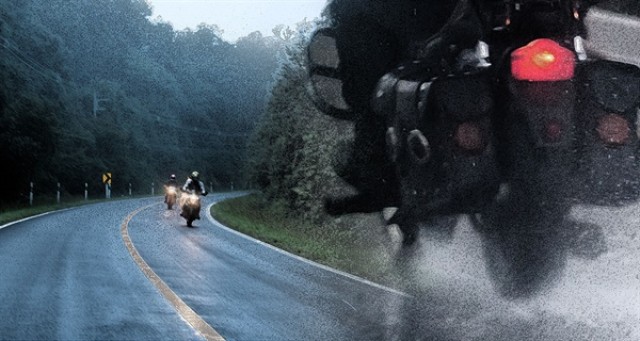
Avoidance tips: Increase following distance to 6 to 8 seconds, brake progressively (favoring front brake 70/30), avoid painted lines, manhole covers, and tar snakes.
Leaves, ice, or snow offer almost no grip.
Avoidance tips: Treat wet leaves like ice: slow down, coast through, and avoid leaning.
4. Infrastructure Hazards
Railroad tracks, metal bridge grates, expansion joints, and drainage grates create specific challenges.
Railroad tracks and grates can trap wheels or provide poor traction.
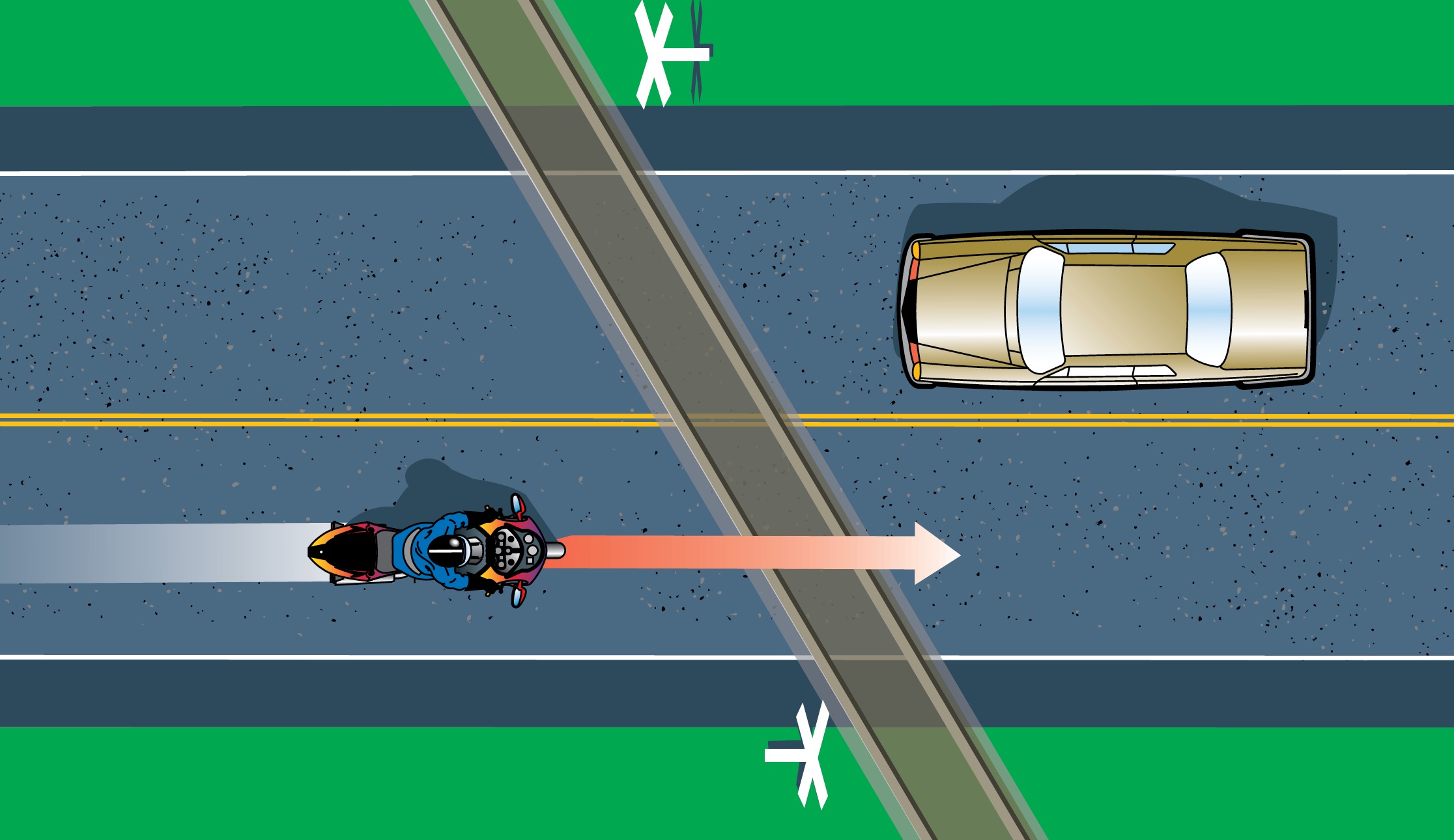
Avoidance tips: Cross at a 90-degree angle whenever possible, reduce speed, rise slightly off the seat, and maintain steady throttle.
Expansion joints on bridges can jolt the suspension.
Avoidance tips: Approach straight-on and avoid sudden inputs.
5. Animals and Wildlife
Deer, dogs, birds, or smaller animals can appear suddenly, especially at dawn or dusk in rural areas.

Risks: Collisions often occur at dawn/dusk in rural areas, leading to severe injuries.
Avoidance Tips: Use high beams at night, slow in wildlife zones, and swerve only if safe – braking straight is often better.
6. Hazards from Other Vehicles
Other drivers contribute to 60-75% of multi-vehicle motorcycle crashes.
Blind spots and lane changes: Cars may not see you and merge into your lane.

Avoidance tips: Stay out of blind spots, use headlights or high beams during the day, and wear bright or reflective gear.
Tailgating or distracted drivers: Reduced reaction time in traffic.
Avoidance tips: Maintain space, flash brake lights to signal your presence, and position in the lane for maximum visibility.
Quick Reference Table: Hazards and Avoidance Strategies
| Hazard Category | Examples | Key Risks | Avoidance Tips |
|---|---|---|---|
| Surface Irregularities | Potholes, Cracks | Loss of control, ejection | Scan ahead, slow down, cross perpendicularly |
| Loose Materials | Gravel, Sand, Debris | Skids, traction loss | Reduce speed, no sudden inputs, gentle braking |
| Weather-Related | Wet roads, Ice, Leaves | Hydroplaning, slips | Increase distance, avoid painted surfaces |
| Infrastructure | Railroad tracks, Joints | Wheel trapping, jolts | 90-degree crossing, steady throttle |
| Animals | Deer, Dogs | Sudden collisions | High beams at night, brake straight |
| Other Vehicles | Blind spots, Tailgating | Merges, rear-ends | Stay visible, maintain cushion |
General Safety Tips for All Riders
What is the best lane position for motorcycle riding?
Pre-Ride Inspection: Check tires, brakes, lights, fluids, and cargo balance every time. Defensive Riding: Assume others don’t see you. Obey laws, signal always, and avoid impairment. Training: Enroll in rider education courses; they reduce crash risk by up to 30%. Group Riding: Use staggered formation and communicate hazards with hand signals. Emergency Maneuvers: Practice swerving and quick stops in a safe area.
Preparation and Essential Gear

Always wear full protective gear: DOT-approved helmet, armored jacket, pants, gloves, and boots. Bright or reflective clothing dramatically improves visibility.
Conclusion
Mastering road hazards turns potential dangers into manageable challenges. By internalizing this guide, scanning relentlessly, preparing your gear and bike, and riding defensively, you will join the ranks of safe, long-term motorcyclists. Bookmark this article, share it with your riding group, and revisit it often. Ride smart, stay alive, and enjoy the open road. For more resources, visit NHTSA’s motorcycle safety page.