Rear-ending is one of the most common types of crashes involving motorcycles. It happens when a vehicle hits the back of your bike, often due to inattention, tailgating, or poor visibility. While you can’t control every driver on the road, there are plenty of effective ways to reduce your risk. Let’s dive into detailed strategies that every rider should know to stay safe and avoid rear-end collisions.
Keeping a proper gap between you and the vehicle ahead is crucial. Riding too close forces you to brake suddenly if the traffic slows, which often catches the driver behind off guard.
Maintain a Safe Following Distance
- Use the two-second rule as a baseline: when the vehicle in front passes a landmark, count “one thousand one, one thousand two.” If you reach that landmark before finishing the count, you’re too close.
- In bad weather or heavy traffic, increase this to three or more seconds.
- This buffer lets you brake gently and predictably, which in turn gives drivers behind you more time to react safely.
By maintaining this space, you avoid panic stops and reduce the risk of a chain reaction crash.
Use Your Brake Lights Wisely
Brake lights are your main way to communicate slowing or stopping intentions. How and when you use them can make a big difference.
- Avoid slamming the brakes suddenly unless it’s an emergency — gradual braking means your lights come on smoothly, giving drivers behind a clear warning.
- Learn to use engine braking by downshifting before applying the brakes; this slows your bike more smoothly and extends the warning time.
- Regularly clean and check your brake lights to make sure they are bright and visible — a dim or broken light greatly increases your risk.
The goal is to be predictable so drivers behind aren’t startled and have enough time to adjust their speed.
Increase Your Visibility
Many rear-end collisions happen simply because the rider wasn’t noticed in time.
- Choose bright, reflective riding gear and helmets — neon colors or reflective strips can catch drivers’ eyes instantly, even in low light or bad weather.
- Consider upgrading your bike with additional brake lights or LED auxiliary lights mounted higher up, which are easier to spot in traffic.
- When stopped, position yourself so drivers behind have a clear view — avoid blind spots or parking too close to bigger vehicles.
- Always signal your intentions clearly and early. Using turn signals several seconds before changing lanes or turning gives extra reaction time.
Maximizing visibility is your first line of defense.
Avoid Sudden Speed Changes
Unexpected acceleration or braking is a common cause of rear-end collisions because drivers behind may not anticipate these moves.
- Ride smoothly — keep your throttle steady, anticipate traffic flow, and avoid abrupt stops or accelerations.
- If you must slow down, start gradually, giving ample time for your brake lights to alert others.
- In stop-and-go traffic, try to maintain consistent speeds when possible to avoid “surprise” stops.
Riding predictably makes you more readable to others and significantly reduces risk.
Stay Alert to Traffic Behind You
Rear-end collisions often happen because riders aren’t aware of the vehicles approaching from behind.
- Frequently check your mirrors — every few seconds — so you know who’s behind and how close they are.
- If someone is tailgating aggressively, plan a safe moment to let them pass.
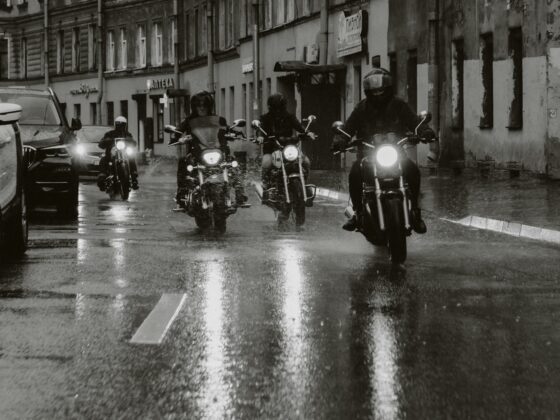
- Recognize dangerous behaviors like distracted driving or speeding cars and prepare to react by increasing your own following distance or changing lanes.
Awareness of what’s behind you gives you precious seconds to react and avoid danger.
Choose Your Lane Position Carefully
Your spot in the lane affects how visible you are and how easy it is to avoid hazards.
- Ride where drivers can see you best — usually, the left or right third of the lane depending on traffic.
- Avoid riding in blind spots, especially behind trucks or large vehicles.
- Position yourself with enough space on both sides so you can maneuver if necessary.
Smart lane positioning creates more escape routes and keeps you in the driver’s sight.
Use Emergency Braking Techniques When Needed
Sometimes, despite your best efforts, you need to brake suddenly. Practicing emergency braking can save your life.
- Learn how to use both front and rear brakes effectively without locking wheels.
- Keep your body relaxed and your eyes focused ahead — panic braking can cause loss of control.
- Combine braking with evasive maneuvers like swerving if you detect a potential collision from behind.
Regular practice of these skills in safe environments builds confidence and control for real emergencies.
Keep Your Bike in Top Condition
Your motorcycle’s mechanical state plays a huge role in how well you can stop and signal.
- Check brakes, tires, and lights regularly. Worn tires reduce grip; faulty brakes increase stopping distance.
- Replace bulbs immediately when brake lights or indicators fail.
- Clean your bike often to ensure lights stay bright and visible.
A well-maintained bike helps you react faster and communicate better with other road users.
Avoid Riding in Heavy Traffic Whenever Possible
Busy roads mean more vehicles, more stops, and less space — increasing rear-end collision risk.
- If possible, plan your rides outside rush hours or avoid congested routes.
- On heavy roads, increase your following distance more than usual and stay extra alert.
- Sometimes slower, calmer roads are actually safer and less stressful for riding.
Reducing exposure to risky situations is one of the smartest safety moves.
Practice Defensive Riding
Above all, think like other drivers might make mistakes or not see you at all.
- Assume drivers behind may not notice you immediately and be ready to react calmly.
- Always have an escape route in mind — a lane change, shoulder, or open space.
- Don’t rely solely on your visibility; anticipate hazards and ride as if you’re invisible.
Defensive riding isn’t just a skill, it’s a mindset that can save your life.
In summary:
Avoiding rear-ending on your motorcycle isn’t just about hoping others drive well. It’s about being proactive – maintaining safe distances, communicating clearly, staying visible, and always being ready to respond. By adopting these habits and preparing yourself both mentally and physically, you drastically cut the chances of being hit from behind and enjoy a safer, more confident ride.
Ride smart, stay seen, and always be ready!